Hunting
camouflage.
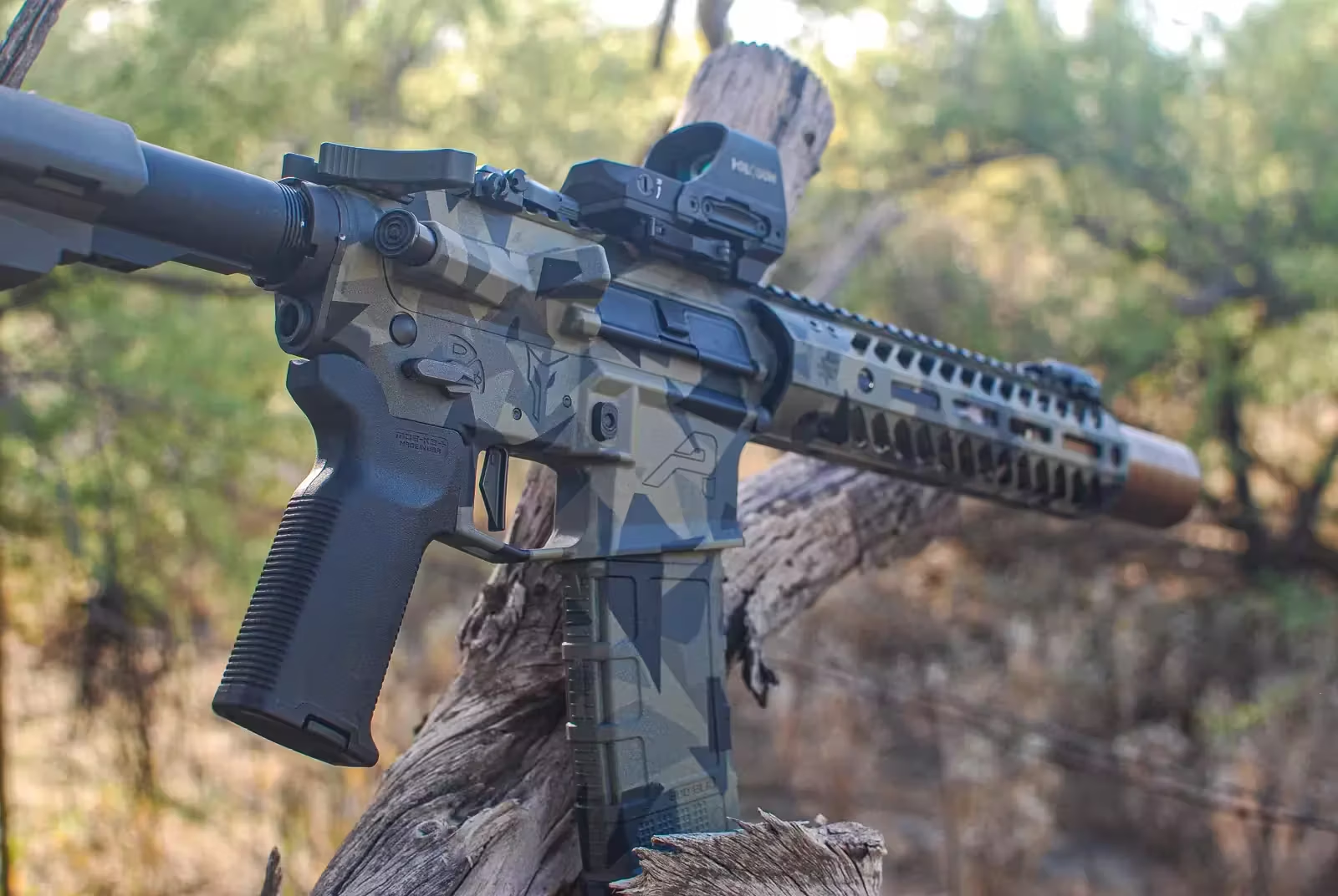
A pattern built for dark timber does not work in sage country. A pattern built for desert does not work in hardwoods. We design rifle camouflage around the terrain you actually hunt, not a one-size-fits-all wrap.
Start My Pattern →Pick your terrain.
We build patterns around the ground you hunt, not the species. A mule deer rifle in sage and an elk rifle in dark timber are two different pattern problems.
Sonoran, Chihuahuan, Great Basin
Desert Rifle Camouflage
We work out of the Sonoran Desert. Desert rifle camouflage isn't a side project for us, it's the first terrain we built patterns for in 2000 and it's still most of what we coat. What reads correctly in West Texas brush doesn't read correctly on the Arizona Strip, and what works in the Great Basin doesn't work on a javelina hunt north of Phoenix. Whether the rifle is going after coues deer, desert mule deer, javelina, desert sheep, or coyote, it has to disappear against sand, rock, and shadow first.
Read More →Western open country. Sage, rock, shadow.
Sage & Rimrock Rifle Camouflage
Open western country (sage flats, rimrock basins, cedar ridges) is a glassing game. Hunters spend more time behind optics than behind a trigger, which means the rifle sits exposed in a lap or on a tripod for hours at a stretch. This is the pattern problem for mule deer, antelope, coyote, and the late-summer bighorn stalk. A good sage-country pattern has to read as terrain at 600 yards and up close at 30. That's harder than most off-the-shelf camo solves for.
Read More →High country. Dark timber, shadow, aspen.
Mountain & Timber Rifle Camouflage
High-country timber is vertical, dark, and wet. A rifle hunted through this country, whether the target is elk, black bear, mountain mule deer, or bighorn sheep in late season, spends most of the day pressed against dark timber, wet rock, and aspen bark. The pattern problem is different from open country. Lower chroma, more shadow, more vertical texture. Most off-the-shelf camouflage reads as noise in timber. We build patterns that read as timber.
Read More →Eastern. Midwest. Field-edge and treestand.
Hardwoods & Forest Rifle Camouflage
Eastern and midwestern hardwood country does two things western country doesn't. The color of the woods changes completely across the season, and most of the hunt happens from 12 to 20 feet up in a tree. This is whitetail territory, but it's also turkey, black bear over bait, and the increasingly common eastern pig hunt. A rifle camouflaged for October green hardwoods reads wrong against November bare limbs reads wrong against December corn stubble. We design hardwood patterns to work across that seasonal range rather than lock into one frame.
Read More →Winter. Tundra. Late-season.
Snow & Late-Season Rifle Camouflage
Snow and tundra country look like a simpler camouflage problem than they are. White is not a single color. A snowfield at noon on a bluebird day reads different from wet spring corn-snow reads different from shadow-soaked late-afternoon drifts. This is the pattern problem for late-season mule deer, high-arctic caribou, winter coyote hunting, and anyone still in the field after Thanksgiving in snow country. A pure-white rifle works in exactly one specific condition and reads wrong in every other.
Read More →Pattern is one decision. Here are the rest.
Service
Custom camouflage service →
How we design and hand-apply each pattern, start to finish.
Comparison
DuraCoat vs Cerakote →
Why freehand, layered camo only works with air-cured finishes.
Pricing
What does it cost? →
Flat rate per color. Whole rig included.
Alternative
Why DuraCoat →
The air-cure finish that lets us layer camo freehand.