
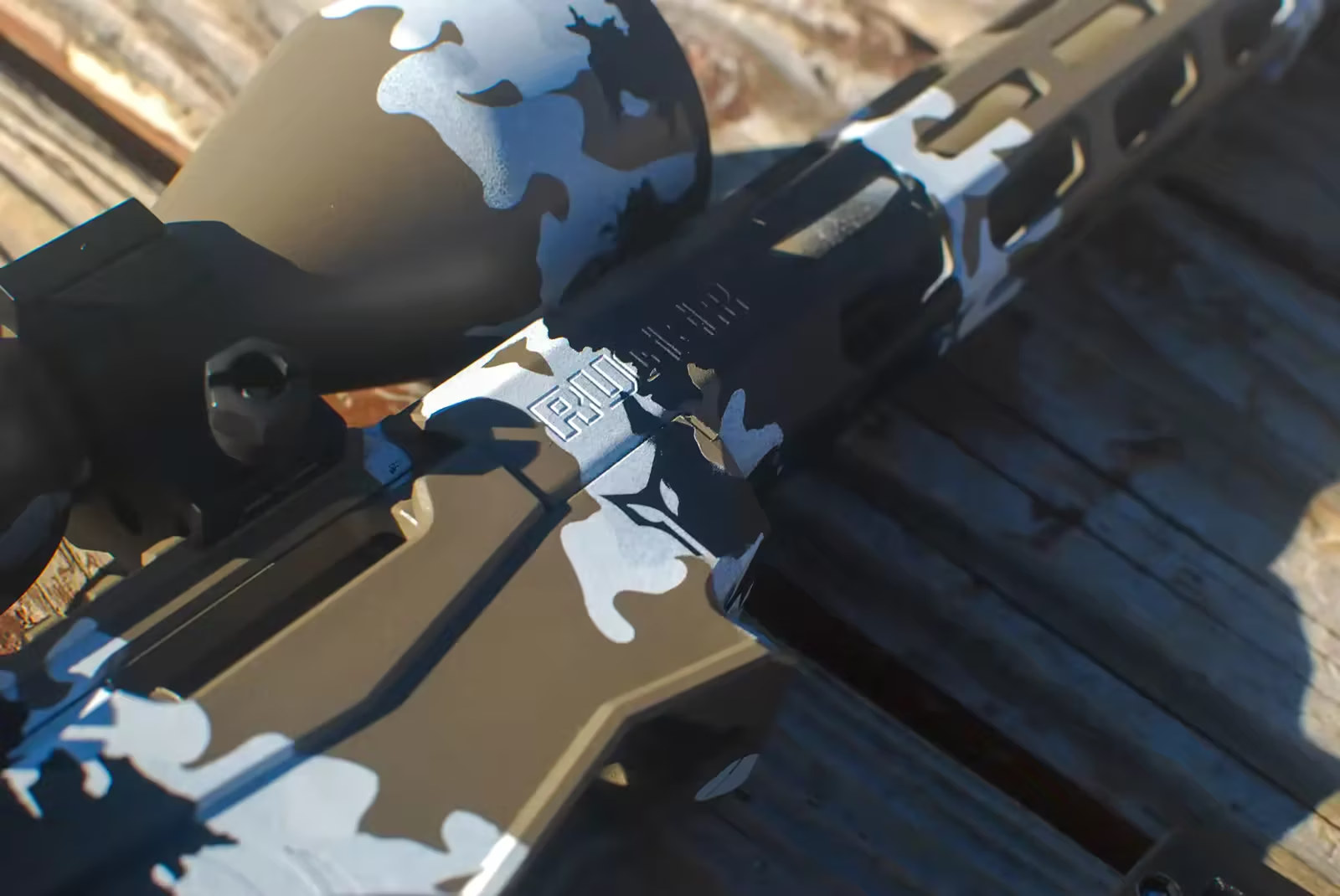
DuraCoat vs
Cerakote.
Most comparisons online are written by shops that only run one of them. We are DuraCoat certified, so our bias is honest. Here is how the two finishes actually differ in application, durability, lifespan, and what they can (and can’t) be put on.
DuraCoat Certified Applicator · 25+ years of reps ·
The Short Answer
DuraCoat and Cerakote are both two-part, mil-spec firearm finishes that pass the same abrasion and salt-spray standards. Cerakote is marginally harder. DuraCoat is marginally more flexible. For a shooter, the decision almost never comes down to hardness.
- Cerakote needs a 250F to 300F oven. DuraCoat air-cures at room temperature. That single difference drives every other trade-off below.
- If your rig has an optic, a polymer stock, or a suppressor on it, Cerakote generally cannot include those parts. DuraCoat can coat the whole system at once.
- If you want layered custom camouflage, DuraCoat is the practical choice, because each Cerakote layer would need its own bake cycle.
- If you want a single solid color on an all-metal firearm, either one will serve you well. Pick on shop quality, not on brand.
- Neither finish wears out on a schedule. Both last the practical life of the gun when surface prep is done right, and both fail early when it is not.
Why everyone says “Cerakote.”
Cerakote has become the Kleenex of gun finishes. People walk in and ask us to “Cerakote” a rifle the same way they ask for a Band-Aid or a Xerox, meaning the category rather than the brand. Most of the time they are not asking for a specific chemistry at all. They are asking for a durable, good-looking, non-rusting finish on their gun.
That is worth naming, because it changes what this comparison is for. If you came here trying to decide between two products, the table below settles it. If you came here because you want your rifle refinished and Cerakote is simply the only word you knew for it, the honest answer is that you have more than one good option, and the right one depends far more on what is bolted to your rifle than on which label is on the can.
We run DuraCoat. We will tell you plainly when Cerakote is the better call for your particular job, and we say so further down this page. What we will not do is pretend the two are interchangeable, because on a rig with glass and polymer on it, they are not.
Where they actually differ.
How long does a gun coating actually last?
Longer than most people expect, and the brand is rarely the reason it fails. A correctly applied finish of either type lasts the practical life of the firearm. Neither one degrades on a calendar. There is no service interval.
What actually determines lifespan is the two hours of work that happen before any color goes on. Every part has to be fully degreased, media blasted to a consistent anchor profile, and degassed so nothing weeps out of the pores later. When you see a refinish sheeting off in flakes a year in, you are looking at a prep failure. The coating did exactly what it was supposed to do, which was stick to whatever was underneath it. There was oil underneath it.
Where wear actually shows up.
Both finishes burnish at hard contact points long before they fail anywhere else. On a carry pistol, the slide edges and the muzzle crown go first from holster draw. On a hunting rifle, it is the sling contact points and wherever the stock rides a pack frame. This is honest wear, and on a working gun it happens over years, not months.
The difference between the two chemistries shows up under impact rather than abrasion. Cerakote’s ceramic filler makes it measurably harder, which wins short-duration Taber abrasion tests. That same hardness makes it more brittle when a rifle takes a sharp knock against rock. DuraCoat’s epoxy carrier flexes slightly under that load and tends to absorb the hit instead of chipping out. Neither behavior is better in the abstract. It depends entirely on whether your gun lives in a safe or in the back of a truck.
Sun, salt, and solvents.
Both finishes are UV-stable and neither should yellow. We are in Arizona, which is about as hard a UV test as exists in the continental United States, and we have DuraCoat work sitting in direct sun 8+ years out with no fade or chalking. Both handle standard bore solvents and CLP without softening. Both resist salt spray well past what a sporting arm will ever see.
“Cerakote” is not one product.
Part of why comparisons get muddy is that Cerakote is a product family, not a single coating. When someone quotes you a Cerakote job, it is worth knowing which line they mean, because the properties differ substantially.
All of these still require an oven. That is the constraint that matters, and it does not go away by moving up the product line.
How both compare to everything else.
DuraCoat and Cerakote are the two modern sprayed finishes, but they are not the only way to protect a firearm. Here is where the older and adjacent options land.
Powder coating
Tougher film, far worse fit for firearms.
Powder coat goes on thick and bakes near 400F. That thickness swallows roll marks and engraving, binds tight-tolerance parts, and the bake temperature rules out optics, polymer, and most springs. It is excellent on a bumper or a roll cage. On a precision rifle it causes more problems than it solves.
Anodizing
Aluminum only, and it is not a coating.
Anodizing converts the surface of aluminum into oxide rather than adding a layer on top. It is thin, permanent, and excellent on receivers. It also cannot touch steel, cannot produce a camouflage pattern, and offers a narrow color range that fades in UV. Most rigs end up needing a sprayed finish anyway for the steel components.
Bluing
Traditional, beautiful, minimal protection.
Hot bluing is a controlled rust conversion. It looks correct on a classic walnut-stocked rifle and nothing else replicates it. What it does not do is resist corrosion without a constant film of oil. If the gun lives in a safe and gets wiped down, bluing is fine. If it lives in a truck, it is not.
Hydrographic dipping
Photographic pattern, thin protection.
Dipping floats a printed film onto the part and seals it with clear coat. It produces sharp, repeating photo-real patterns cheaply. The tradeoff is that all the durability lives in the clear coat, the pattern repeats visibly on large surfaces, and repairs mean redipping the whole component.
When each one wins.
Pick DuraCoat
For anything that can’t go in an oven.
- Full-rig finishing with optics, polymer stocks, and suppressors included.
- Hand-applied custom camouflage with multi-layer detail.
- Tight-tolerance precision rifle components.
- Firearms with polymer frames like Glock and Sig P320.
- Field rifles that take impact and flex in the stock.
- Anything you may want spot-repaired later without a full strip.
Pick Cerakote
For all-metal, single-color rigs.
- Full-metal firearms with no optic or polymer attached.
- Single solid color with no layered camouflage.
- Applications where the slightly harder Taber result matters (rare on sporting arms).
- Suppressor tubes and barrels where the high-heat C-Series earns its keep.
- Shops that already bake parts for heat-cured bluing adjacent work.
What the price difference really is.
Per-color rates for the two finishes land in the same neighborhood at most shops. Comparing quotes on the headline number alone will mislead you, because the two processes include different amounts of the gun.
Our rate is $150 per color on a rifle and $120 per color on a handgun, plus a flat $50 surface prep fee. A three-color pattern runs $500 and a four-color runs $650. That price covers the whole rifle: receiver, barrel, stock, optic, bipod, and suppressor. With an oven-cured finish, the optic and polymer usually come off the gun and stay uncoated, so a quote that looks similar is covering noticeably less hardware.
At the top end we run the Carnimore Balls to the Wall package at $1,400 flat: one rifle, unlimited colors, stencil work, prep included, and creative domain within reason. Standard turnaround here runs 1 to 2 weeks from receipt.
DuraCoat vs Cerakote FAQ.
Is DuraCoat as durable as Cerakote?
In real-world use, yes. Both meet mil-spec hardness standards. Cerakote cures harder on paper in short-duration abrasion tests, but DuraCoat cures to a two-part epoxy that flexes slightly, which resists impact chipping better on rifles that get hard field use.
How long does a gun coating last?
A correctly applied finish of either type lasts the practical life of the firearm. Neither one wears out on a calendar. What kills a finish is almost always bad surface prep, not the coating itself. Holster draw, sling rub, and bare-metal contact points are where wear shows up first, usually after years of carry rather than months.
Does Cerakote or DuraCoat wear off?
Both wear at contact points under heavy use. On a carry pistol, expect the slide edges and muzzle crown to burnish first. Neither finish peels or flakes if the metal was properly degreased and blasted before spraying. When you see a coating sheeting off in flakes, that is a prep failure, not a product failure.
Can Cerakote be applied to optics and polymer?
Generally no. Cerakote requires a 250F to 300F curing oven. Most optics, polymer stocks, suppressor baffles, and adhesives are not rated for that heat. DuraCoat air-cures at room temperature, so the entire rig can be coated as one complete system.
Which finish is better for custom camouflage?
DuraCoat. Because it air-cures, an applicator can layer color, shadow, vegetation, and detail over multiple sessions without baking between coats. Cerakote's oven-cure cycle makes multi-layer freehand camouflage impractical.
Does DuraCoat yellow or fade in desert sun?
Properly applied DuraCoat is UV-stable and does not yellow. We have coated rifles, and a truck roof rack, that have been in direct Arizona sun for 8+ years with no fade or chalking.
Is Cerakote or DuraCoat cheaper?
Base per-firearm pricing is similar. The cost difference shows up when you want the optic, stock, or suppressor coated too. With Cerakote those parts typically cannot be included. With DuraCoat they can, so the whole-rig price is usually lower even when the per-color rate is the same.
What is the difference between Cerakote H-Series, Elite, and C-Series?
H-Series is the standard oven-cured line most shops run, rated to roughly 500F. Elite is a tougher two-part version with better chemical and abrasion resistance and a longer bake. C-Series is the high-heat line for suppressors and barrels, rated well past 1,000F. All three still need an oven, which is the constraint that matters when your rig has an optic or a polymer stock on it.
Can a coating be touched up or repaired later?
DuraCoat can be spot-repaired and blended without stripping the whole part, because there is no bake cycle to re-run. A Cerakote repair usually means stripping the component back to bare metal and re-baking it. On a multi-color camouflage pattern that difference is significant.
Do you have to strip the old finish first?
Yes, and this is the step that decides whether the job lasts. Every part gets degreased, media blasted to a uniform profile, and degassed before any coating is sprayed. Skipping or rushing prep is the single most common reason a refinish fails, regardless of which brand went on top of it.
Still deciding?
Send us your rig.
Tell us what you shoot, how you use it, and what you want coated. We will tell you honestly whether DuraCoat is the right choice or if you should go elsewhere.
Get a Free Quote →