
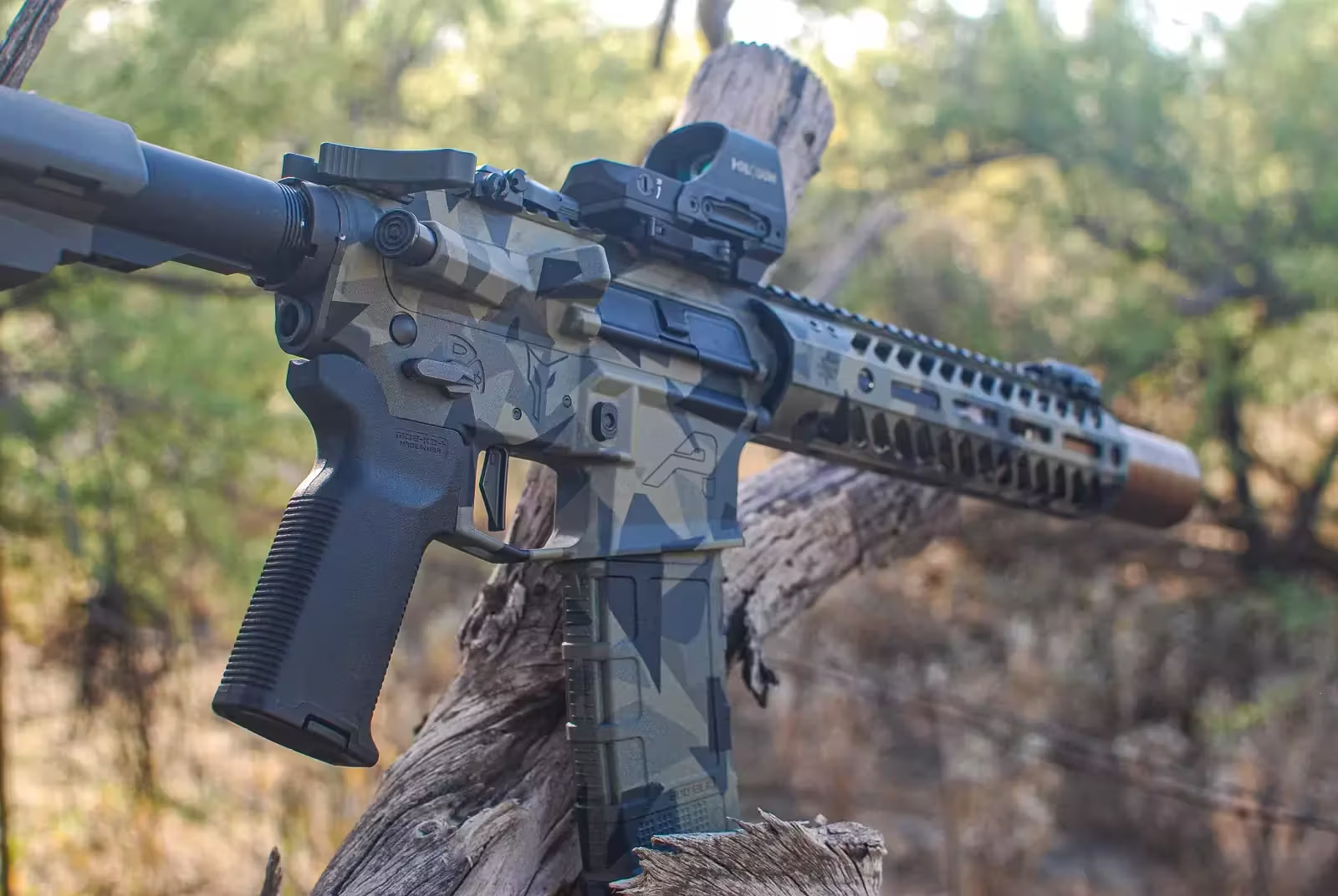
Snow & Late-Season Rifle Camouflage
A late-season rifle in the snow has the opposite problem of a desert rifle. White-dominant country wants a different kind of break-up, and most hunters never think about it until the rifle is already the wrong color.
Hand-applied since 2000
Why this terrain is different.
Snow and tundra country look like a simpler camouflage problem than they are. White is not a single color. A snowfield at noon on a bluebird day reads different from wet spring corn-snow reads different from shadow-soaked late-afternoon drifts. This is the pattern problem for late-season mule deer, high-arctic caribou, winter coyote hunting, and anyone still in the field after Thanksgiving in snow country. A pure-white rifle works in exactly one specific condition and reads wrong in every other.
What we design around.
Winter terrain is never truly monochrome. Even a deep snowpack carries grey shadow, exposed rock, dark conifer edges, and rust-colored brush pushing through. Tundra adds lichen tones and pale tundra grass. The real pattern problem in snow country is silhouette. A hunter standing on a ridge with a white rifle still reads as a hunter-shape holding something horizontal. We design snow patterns to break that silhouette rather than just color-match the snow.
How we build it.
Our snow patterns run a cold-white base with pale-grey shadow mid-tones and deliberate micro-break-up in warm neutrals. Just enough break-up to read as exposed brush, rock, or tundra grass. We avoid pure Titanium White straight out of the can. On a sunlit snowfield a dead-white rifle reads brighter than the snow itself. A soft off-white base lets the pattern sit inside the environment instead of competing with it.
Common questions.
Is a snow camouflage rifle useful in fall or only in winter?
Depends on your hunt. Late-season western mule deer, coyote hunting on snow, arctic caribou, and Alaska winter work all benefit from a snow-biased pattern. For a rifle that sees both early and late season equally, we often build a reversible-reading pattern that leans neutral and works in both frames.
Does DuraCoat handle snow, ice, and salt spray?
Yes. Fully cured DuraCoat is a two-part epoxy. Snow, ice, meltwater, and the salt-spray exposure of coastal Alaska work do not affect a properly applied finish.
Can you do a white-over-dark pattern for late-season use?
Yes. That's one of the most popular late-season builds we do. A cold-white dominant pattern with enough underlying tonal structure that the rifle still breaks up on a bare patch of ground.
Other terrains.
Cost, cure, and shipping.
Service
Custom camouflage service →
How we design and hand-apply each pattern, start to finish.
Comparison
DuraCoat vs Cerakote →
Why freehand camo only works with air-cured finishes.
Pricing
What does it cost? →
Flat rate per color. Whole rig included.
Alternative
Why DuraCoat →
The air-cure finish that lets us layer camo freehand.
Your country.
Your pattern.
Send reference photos of the ground you actually hunt. We will build a pattern around it. Hand-applied, layered, one of a kind.
Request My Quote →