
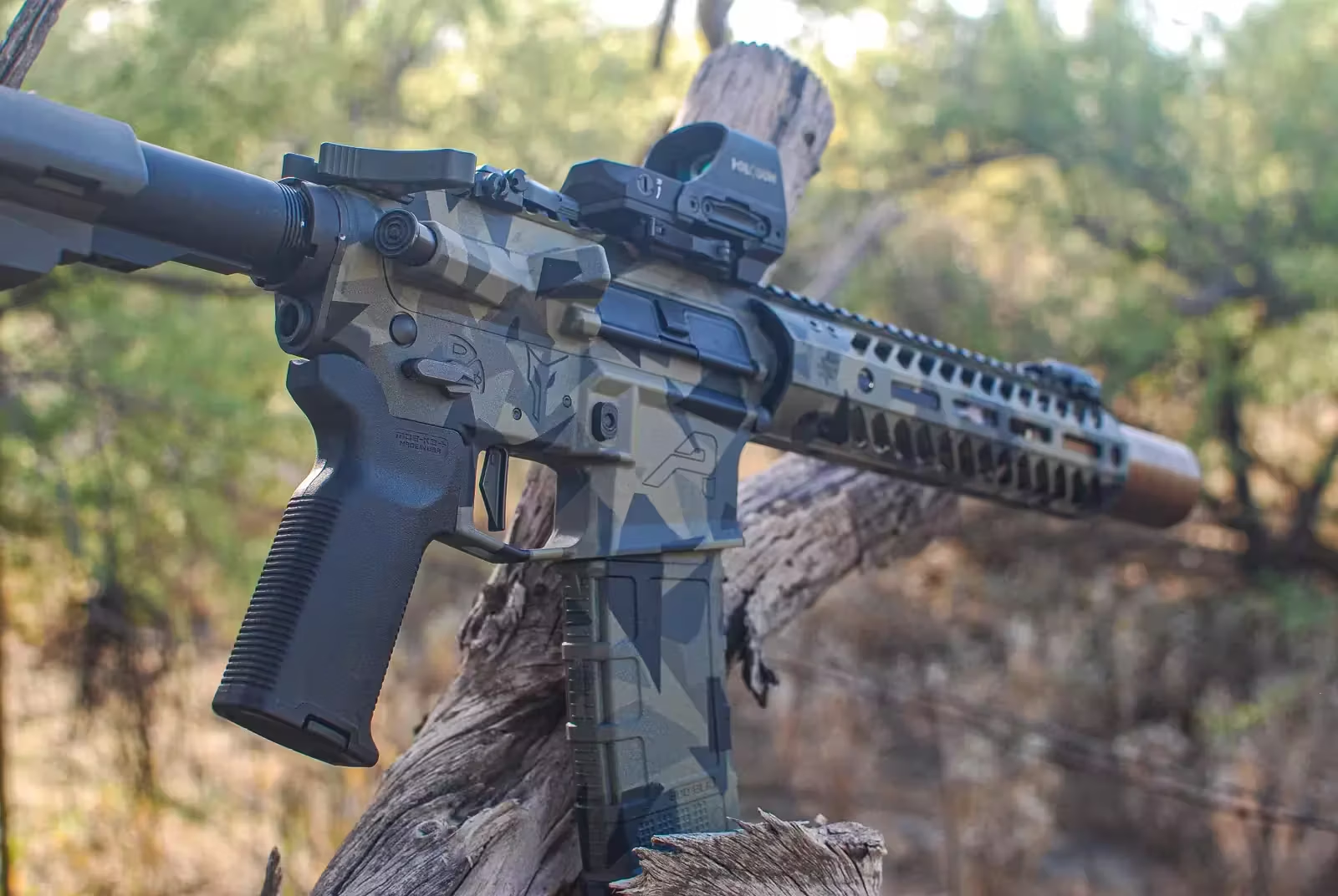
Desert Rifle Camouflage
Volcanic rock, saguaro shadow, desert varnish, dry wash. Desert camouflage is not FDE with spots on it. It’s a specific tonal problem we’ve been solving in Arizona for 25 years.
Hand-applied since 2000
Why this terrain is different.
We work out of the Sonoran Desert. Desert rifle camouflage isn't a side project for us, it's the first terrain we built patterns for in 2000 and it's still most of what we coat. What reads correctly in West Texas brush doesn't read correctly on the Arizona Strip, and what works in the Great Basin doesn't work on a javelina hunt north of Phoenix. Whether the rifle is going after coues deer, desert mule deer, javelina, desert sheep, or coyote, it has to disappear against sand, rock, and shadow first.
What we design around.
Desert country runs on three dominant palettes. Sonoran is warm tan with saguaro green, volcanic black rock, and rust. Chihuahuan leans silver grey with creosote, pale limestone, and yucca shadow. Great Basin is cooler, with sage, alkali white, and juniper. A rifle painted for one of these reads wrong in the other two. Light behavior is the second half of the problem. Harsh midday sun washes everything flat, while low sun throws long shadow edges across rock undercuts and wash banks. We ask which desert you actually hunt, because the pattern changes.
How we build it.
The most common mistake on desert rifles is going too monochromatic. People pick a base tan and call it done. Real desert breaks the eye with sharp shadow edges (rock undercuts, wash banks) and vertical accents (ocotillo, saguaro arms). Our desert patterns build those shadow breaks in deliberately with freehand detail work. From a distance the rifle reads as a piece of desert floor rather than a tan shape sitting on it.
Common questions.
Can you pattern a rifle specifically for Arizona coues deer country?
Yes. Coues terrain, which is oak-manzanita scrub over decomposed granite, is different from saguaro flats and different from the Strip. Send reference photos of your actual unit and we build around it.
Does DuraCoat hold up in desert heat?
Yes. Fully cured DuraCoat is a two-part epoxy and Arizona summer temperatures do not affect it. The first rifles we coated 20+ years ago are still in the field with no fade, chalking, or lift.
Is a custom desert pattern worth it over FDE for a hunting rifle?
On a pure coyote or predator rifle that lives in one terrain band, arguable. On a general-purpose western hunting rifle that sees rock, brush, and open wash all in the same day, a layered desert pattern hides significantly better than any solid color.
Other terrains.
Cost, cure, and shipping.
Service
Custom camouflage service →
How we design and hand-apply each pattern, start to finish.
Comparison
DuraCoat vs Cerakote →
Why freehand camo only works with air-cured finishes.
Pricing
What does it cost? →
Flat rate per color. Whole rig included.
Alternative
Why DuraCoat →
The air-cure finish that lets us layer camo freehand.
Your country.
Your pattern.
Send reference photos of the ground you actually hunt. We will build a pattern around it. Hand-applied, layered, one of a kind.
Request My Quote →