
What Is
Cerakote?
A thin ceramic coating, sprayed on and baked hard, that protects a firearm and changes its color. Here is what that actually means, how the work is done, and what the oven costs you.
DuraCoat Certified Applicator · 25+ years of reps ·
The Short Answer
Cerakote is a brand of thin-film ceramic coating made by NIC Industries. It is sprayed onto a firearm like paint, then cured in an oven at roughly 250F to 300F, which is what takes it to full hardness. It adds corrosion and abrasion resistance and lets you change the color of the gun.
- It is thin. Usually under 1 mil, about a hundredth of the thickness of a business card, so it preserves roll marks and does not bind fitted parts.
- It is a product family, not one coating. H-Series is the common line, Elite is tougher, C-Series handles suppressor and barrel heat.
- It requires an oven. This is the single most important practical fact about it, and the source of every real limitation below.
- It lasts the life of the gun when the prep is done correctly, and fails early when it is not.
- Most people use the word generically. If you asked “what is Cerakote” because you want your rifle refinished, you are really asking about gun coating as a category, and you have more than one good option.
What it is made of.
Cerakote is a polymer resin loaded with ceramic particles. The polymer is the glue that sticks to your steel and holds everything together. The ceramic is the filler that gives the cured film its hardness and abrasion resistance. Heat is what cross-links the resin and drives it to its final properties, which is why the oven is not optional.
The word people usually reach for is “paint,” and functionally that is close enough. It sprays like paint, it covers like paint, and it changes the color of your gun like paint. The difference that matters is that ordinary paint air-dries into a comparatively soft film, while this cures into something hard enough to survive a holster.
It is also worth knowing that Cerakote is a trademark, not a category. Several thin-film gun coatings work on similar principles, and the reason you hear this one name everywhere is marketing reach rather than a lack of alternatives.
How a gun actually gets coated.
The spraying is the part everyone pictures and the least important part of the job. Roughly 80 percent of whether a finish lasts is decided before any color leaves the gun.
Everything comes back to the oven.
A one-hour bake at 250F to 300F is what makes the coating hard. It is also what decides which parts of your rifle are allowed to participate. Rifle scopes and red dots are not rated for it, because heat damages lens coatings and can break the seal on a nitrogen-purged tube. Polymer stocks and frames can soften or warp. Suppressor internals often use adhesives and gaskets that will not survive. Heat-treated springs and small parts can lose temper.
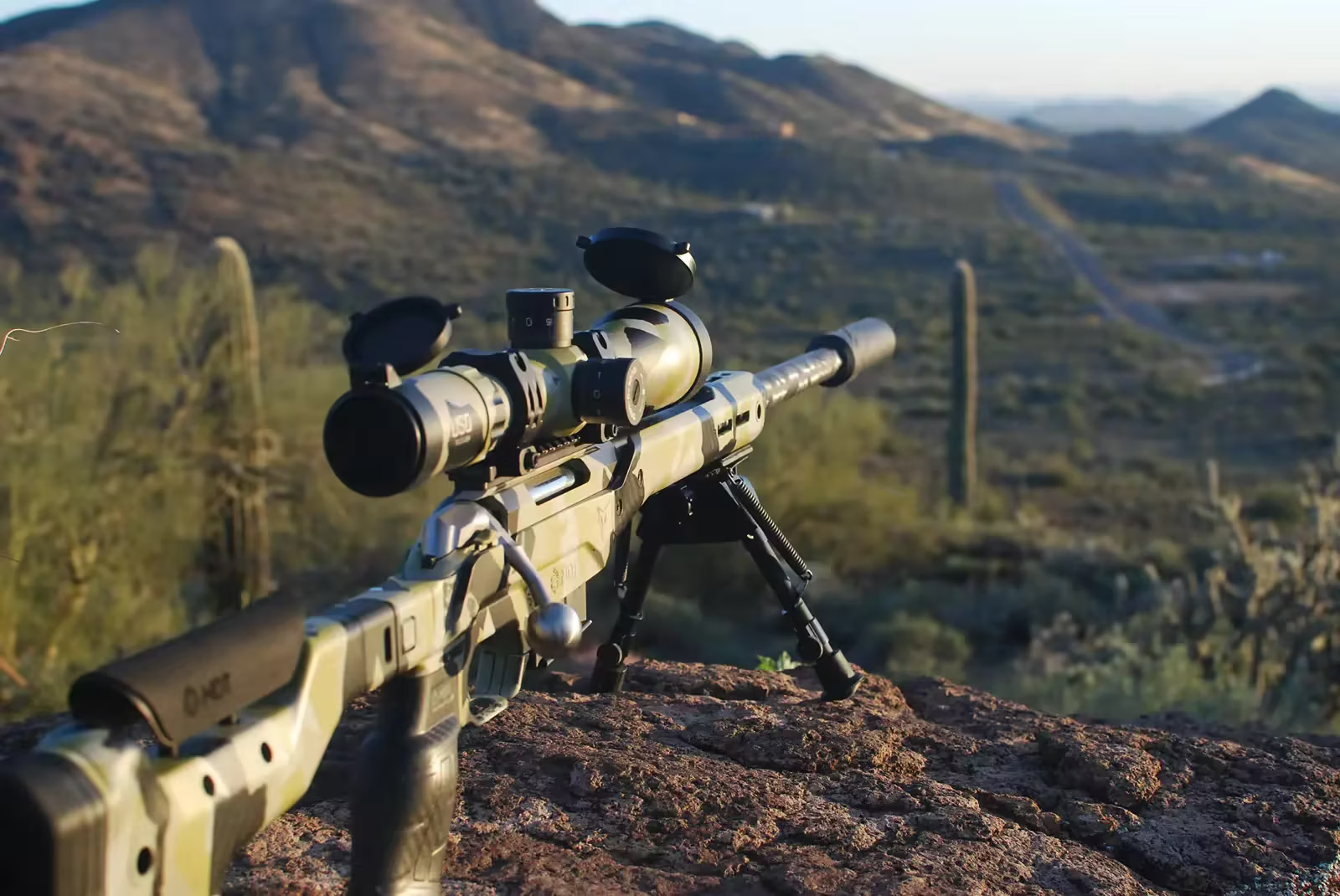
In practice this means your optic comes off and stays whatever color it already was, your stock comes off, and your suppressor is either handled with a special high-heat line or left alone. Plenty of people are perfectly happy with that outcome. It is only a problem if you wanted the whole rig to match.
The bake cycle also constrains artwork. A detailed freehand camouflage pattern is built in layers, and with an oven-cured finish every layer needs its own bake, which is slow enough that most shops will not attempt it. And when a coated part gets chipped later, there is no practical way to blend a spot repair, so the fix is to strip the component and run it through again.
So should you get it?
We are a DuraCoat shop, so read the second column knowing our bias. We have tried to keep the first column as fair as we would want ours written.
Cerakote Is A Good Call
For metal guns in one color.
- All-metal firearms with the optic and stock removed anyway.
- A single solid color with crisp markings preserved.
- Suppressor tubes and barrels, using the high-heat C-Series.
- Anyone who wants the most widely available finish with the largest color library.
Look At An Air-Cured Finish
For anything with glass on it.
- Full-rig work where the optic, stock, bipod, and can should match.
- Layered custom camouflage built for specific terrain.
- Polymer-framed pistols you would rather not put in an oven.
- Anything you may want spot-repaired later without a full strip.
Cerakote FAQ.
What is Cerakote?
Cerakote is a brand of thin-film ceramic coating made by NIC Industries, sprayed on like paint and then cured in an oven. On firearms it is used to add corrosion and abrasion resistance and to change the color. It typically goes on under 1 mil thick, which is thin enough to preserve roll marks and the fit between machined parts.
Is Cerakote paint?
Not in the ordinary sense. It sprays like paint and looks like paint, but it is a polymer matrix loaded with ceramic particles, and it needs a heat cure to reach its final hardness. Ordinary paint air-dries and stays comparatively soft. That said, calling it a paint job is close enough for most conversations and nobody in a gun shop will correct you.
How is Cerakote applied?
The firearm is fully disassembled, degreased, and media blasted to give the surface a profile the coating can grip. Parts that must not be coated get masked. The coating is then sprayed with an airbrush or spray gun in a thin, even pass and the parts go into an oven at roughly 250F to 300F for about an hour. After cooling, the gun is reassembled and function checked.
How long does Cerakote last?
On a properly prepped firearm it lasts the practical life of the gun. There is no expiry date and no service interval. Wear appears at hard contact points first, such as slide edges on a carry pistol or sling rub on a rifle, and that takes years of real use. Coatings that flake off early almost always failed because of inadequate surface prep, not because of the product.
How much does Cerakote cost?
Professional work commonly runs a few hundred dollars for a single-color handgun or rifle, with multi-color and pattern work costing more. Prices vary widely by shop and region. Be careful comparing quotes directly, because an oven-cured quote usually excludes the optic and polymer stock while an air-cured quote can include them.
What are the downsides of Cerakote?
The oven is the main one. Curing at 250F to 300F means optics, polymer stocks, suppressor internals, springs, and anything with an adhesive generally cannot go through the process, so those parts come off and stay their original color. The bake cycle also makes layered freehand camouflage impractical, and repairs usually mean stripping the part and baking it again rather than blending a touch-up.
Can you Cerakote a polymer frame like a Glock?
Some shops do it using the lower-temperature product lines and careful oven control, but it carries real risk of warping the frame, and many shops decline. An air-cured finish avoids the question entirely because there is no heat stage at all.
Is Cerakote worth it?
For an all-metal firearm you want protected and recolored in a single solid color, yes. It is a proven, well-supported finish with a large color library. If your rig has glass and polymer on it, or you want a layered camouflage pattern, the oven requirement becomes a real limitation and an air-cured finish is usually the better fit.
Want your rifle
refinished properly?
Tell us what you shoot and how you use it. We will tell you honestly which finish fits your rig, even when the answer is one we do not sell.
Get a Free Quote →