
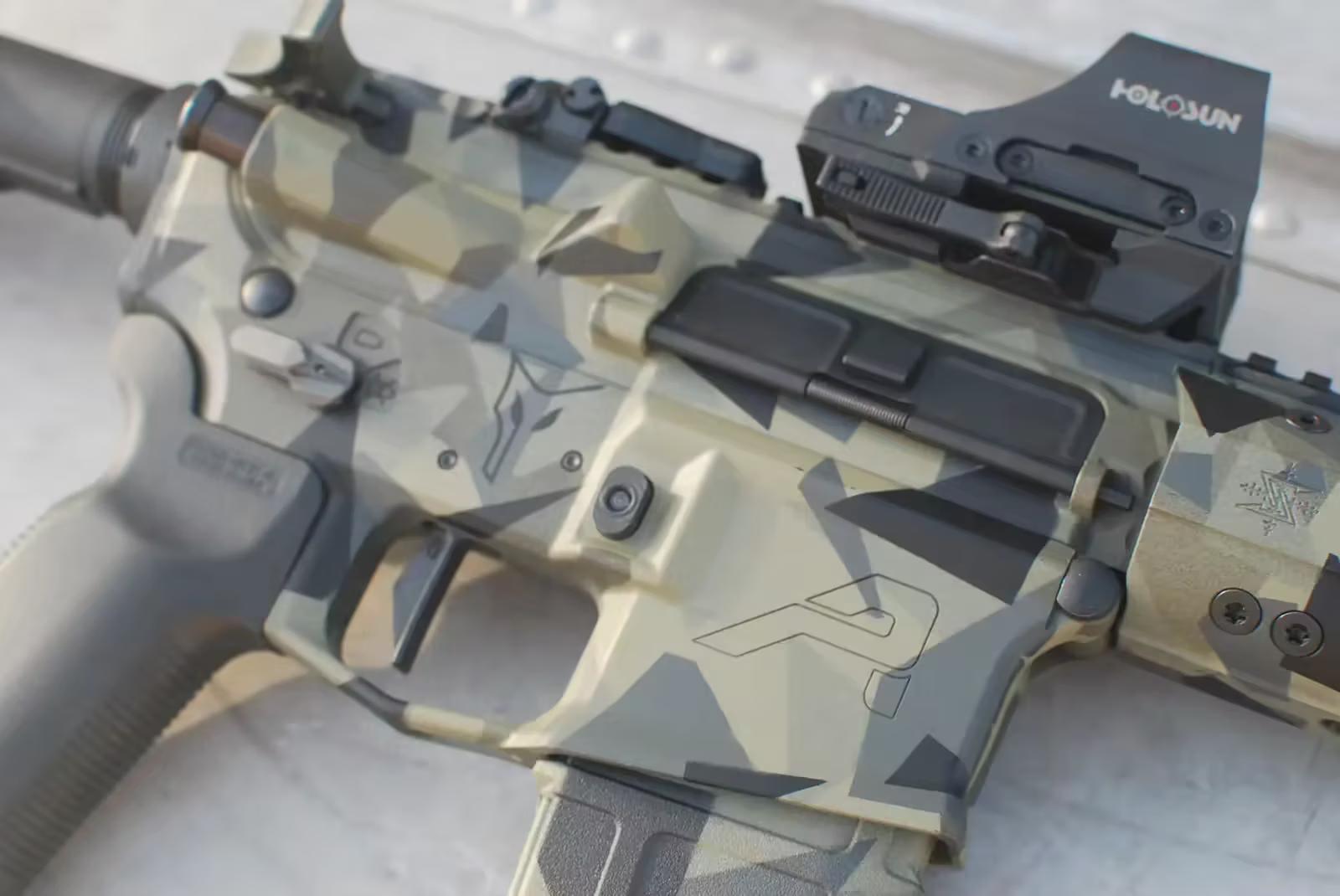
Cerakote vs
Anodizing.
These two are usually framed as competitors. They are not really. One converts aluminum into its own armor, the other coats anything you point it at. Most rifles end up wearing both.
DuraCoat Certified Applicator · 25+ years of reps ·
The Short Answer
Anodizing converts the surface of aluminum into a hard oxide that is part of the metal. Cerakote is a coating sprayed on top of the part. They are not really alternatives to each other, because anodizing cannot touch the steel on your rifle and it cannot be done outside a plating tank.
- Anodizing is aluminum only. Your barrel, bolt, and most fasteners are steel, so they need something else regardless.
- Anodizing cannot chip or peel, because there is no separate layer to come off. It wears through instead.
- Cerakote protects steel from corrosion. Anodizing does nothing for steel at all.
- Anodized color is dye in the pores, and bright dyes fade in UV over the years. Sprayed pigment holds color better outdoors.
- You can coat over anodizing, and on AR builds that is the normal path when you want a color change or a matched set.
One is a layer. One is the metal.
Anodizing works by putting an aluminum part in an acid bath and running current through it. That grows a controlled oxide layer out of the surface of the part. Because the oxide is the metal, chemically transformed, there is no bond line and nothing to delaminate. You cannot chip anodizing off. You can only abrade through it.
A sprayed coating works the opposite way. It sits on top and holds on by mechanical grip into a blasted surface profile. That is why prep matters so much, and why a badly prepped coating flakes while a well prepped one lasts the life of the gun. The upside is that a coating does not care what is underneath it. Steel, aluminum, titanium, and polymer all take the same finish, which means the whole gun can match.
There is also a practical asymmetry worth knowing. Anodizing is a production process. Parts go to a plating house, in racks, in batches, and the tank has to be set up for the alloy. It is not something a gunsmith does to your assembled rifle. Coating is a shop process that happens to your specific gun.
Where they actually differ.
Your rifle probably already has both.
Take a normal AR. The upper and lower receivers and the handguard are aluminum and came hard anodized from the factory. The barrel is steel. The bolt carrier group is steel. The muzzle device, the fasteners, and most of the small parts are steel. So the gun already carries two finishing systems, chosen by substrate rather than preference.
That is why the question people actually mean when they search this is usually narrower: can I change the color, and can I get everything to match. Re-anodizing means stripping the existing oxide and sending parts to a plating house, and it still leaves every steel component untouched. Coating over the top gets the whole rifle to one color in one pass, and it works on the parts anodizing cannot reach.
Our own bias is worth stating plainly: we run DuraCoat, which air-cures rather than baking, so we can carry that same matched finish onto the optic, the polymer stock, the bipod, and the suppressor as well. Anodizing is genuinely excellent at what it does. It just does not do that.
Cerakote vs anodizing FAQ.
What is the difference between Cerakote and anodizing?
Anodizing is an electrochemical process that converts the surface of aluminum into a hard oxide layer, so the finish is part of the metal. Cerakote is a ceramic-filled coating sprayed on top of the part and baked. Anodizing only works on aluminum. Cerakote works on steel, aluminum, and most other substrates.
Can you anodize steel?
No. Anodizing depends on growing an oxide layer out of the base metal, and that chemistry only works on aluminum and a few other metals such as titanium and magnesium. Steel barrels, bolts, and receivers cannot be anodized, which is why a rifle with anodized aluminum parts still needs something else for its steel.
Which is more durable, anodizing or Cerakote?
Type III hard anodizing is extremely abrasion resistant and, because it is part of the metal rather than a layer on it, it cannot chip or peel. Cerakote is tougher against impact and offers better corrosion protection on ferrous metal. For a rifle receiver that will be handled and scuffed, hard anodizing wears exceptionally well. For a steel barrel exposed to sweat and weather, Cerakote protects far better.
Can you Cerakote over anodizing?
Yes, and it is common. The anodized surface is already porous and, once degreased and lightly abraded, it takes coating well. Plenty of AR builds are anodized from the factory and then coated to change the color or to match the upper, lower, and steel components as a set.
Why do anodized parts fade?
Most anodized color comes from dye absorbed into the pores of the oxide layer before it is sealed. Those dyes are organic and are not fully UV stable, so bright colors in particular can shift or fade over years of sun exposure. Black holds up best. Sprayed coatings use pigments that generally hold color better outdoors.
Does anodizing change dimensions?
Slightly, and in an unusual way. The oxide layer grows both into and out of the surface, so roughly half the thickness is penetration and half is build-up. Type III can add enough to matter on close-fitting parts, which is why anodizing is specified before final fitting on precision components rather than after.
Which should I pick for an AR-15?
For most builds the question answers itself. The aluminum receivers are already hard anodized from the factory and there is rarely a reason to redo that. If you want a different color, or you want the steel barrel and handguard hardware protected and matched to the receivers, a sprayed coating over the top is the practical route.
Want the whole rig
to actually match?
Send us your parts list. We will tell you what is anodized, what is steel, and what it takes to get all of it to one finish.
Get a Free Quote →